How To Turn Clicks to Clients From Website Traffic Into Real Business Growth

At a Glance — Key Takeaways
- Most businesses lose 97% of their website visitors without converting them into customers
- Page speed, trust signals, and clear calls-to-action are the three biggest conversion levers
- Small, data-backed changes outperform full redesigns almost every time
- Personalisation and mobile-first design are no longer optional — they’re survival requirements
- Working with the right digital marketing partner accelerates results by months, not weeks
The Uncomfortable Truth About Your Website Traffic
Here’s a question most business owners avoid: if 10,000 people visited your website last month and only 200 bought something, are you celebrating or panicking?
You should probably be doing a little of both.
The truth is, the average website conversion rate across all industries hovers between 2% and 4%, according to data from WordStream. That means for every 100 people who show up at your digital doorstep, 96 of them leave without doing anything — no purchase, no enquiry, nothing.
Think about what that actually costs. If you’re spending RM5,000 a month on paid traffic, you’re potentially discarding RM4,800 of that budget on visitors who bounce before they’ve even read your headline. That’s not a traffic problem. That’s a conversion problem — and it’s fixable.
This article is not about getting more visitors. It’s about making the visitors you already have far more likely to say yes.
Why Most Businesses Chase Traffic Instead of Conversions
There’s a psychological pull to vanity metrics. Page views feel good. Follower counts feel meaningful. But ask any experienced strategist at a reputable digital marketing agency in Penang, and they’ll tell you the same thing: traffic without conversion is just noise with a price tag attached.
The obsession with traffic often comes from the fact that it’s visible and measurable in the most surface-level way. You can see it spike on a graph after a campaign launches. Conversions are trickier — they require understanding user psychology, testing hypotheses, and sitting with data that doesn’t always tell a flattering story.
The businesses that win in the long term are the ones willing to ask a harder question: “Why are people leaving without taking action?”
Here’s a useful framework to start with:
| Visitor Behaviour | What It Usually Means | Typical Fix |
| High bounce rate on landing pages | Message mismatch — ad promised X, page delivers Y | Align ad copy with landing page headline |
| Long time on page, no conversion | Interest without confidence | Add trust signals, testimonials, and clearer CTA |
| Cart abandonment above 70% | Friction at checkout | Simplify form, add payment options, show security badges |
| Short session duration across the site | Poor user experience or slow load speed | Technical audit — speed, mobile UX, navigation |
| Form views but no submissions | Form is too long or asks for too much | Reduce fields to bare minimum |
Once you can diagnose why people leave, you can actually fix it — rather than dumping more budget into ads hoping the math eventually works in your favour.
The Conversion Rate Formula Most People Overcomplicate
Conversion rate is deceptively simple:
Conversion Rate = (Conversions ÷ Total Visitors) × 100
If 50 people fill out your contact form out of 2,000 monthly visitors, your conversion rate is 2.5%. The goal of conversion rate optimisation (CRO) is to move that number up — ideally without needing to spend a cent more on acquiring traffic.
What counts as a “conversion” depends on your business model:
- Hard conversions: Purchases, signed contracts, paid bookings
- Soft conversions: Newsletter sign-ups, whitepaper downloads, demo requests, WhatsApp clicks
Both matter, but they’re not equal. Soft conversions feed your pipeline. Hard conversions pay your bills. A good strategy tracks both and understands the relationship between them.

Speed Is Not a Luxury. It’s the First Impression.
Imagine walking into a restaurant and waiting 8 seconds for anyone to acknowledge you exist. You’d probably leave. Your website works the same way.
Research from Google’s own platform data shows that as page load time goes from 1 second to 3 seconds, the probability of a mobile user bouncing increases by 32%. Push that to 5 seconds, and the bounce probability jumps 90%. These aren’t theoretical numbers — they’re measured across millions of real sessions.
In Malaysia’s digital landscape, where a significant chunk of web browsing happens over 4G mobile connections while commuting or waiting in a queue, speed isn’t just a technical concern. It’s a business-critical priority.
Here’s what to measure and target based on Google’s 2025–2026 Core Web Vitals benchmarks:
| Core Web Vitals | What It Measures | Good Score | Needs Improvement | Poor |
| Largest Contentful Paint (LCP) | How fast main content load | < 2.5 seconds | 2.5–4 seconds | 4 seconds |
| Interaction to Next Paint (INP) | Responsiveness to user input | < 200ms | 200–500ms | 500ms |
| Cumulative Layout Shift (CLS) | Visual stability | < 0.1 | 0.1–0.25 | 0.25 |
These metrics directly influence both user satisfaction and how your site is evaluated by search algorithms. Getting them right is one of the highest-return technical investments a business can make.
Trust Is the Silent Gatekeeper
You’ve fixed the speed. The page looks clean. The offer is clear. And still, people hesitate.
This is where trust comes in — specifically, the absence of it.
Think about the last time you bought something from a brand you’d never heard of. What made you finally commit? Chances are it was a combination of: recognisable payment methods, visible reviews from real people, a professional design that didn’t look like it was assembled in 2012, and some indication that this company actually exists in the real world.
Online shoppers in Malaysia are particularly sensitive to this. A 2023 survey by Shopee and PayNet highlighted that consumer trust in digital transactions is growing — but so are the expectations that come with it. Buyers want signals that they’re safe before they hand over their details or their ringgit.
The trust signals that actually move the needle:
| Trust Signal | Why It Works | How to Implement |
| Customer testimonials with full names and photos | Real humans are more credible than anonymous quotes | Collect post-purchase, feature prominently above the fold |
| Case studies with measurable outcomes | Specificity = credibility | Show before/after metrics, name the client where possible |
| Industry certifications and awards | Third-party validation removes doubt | Display logos near CTAs and on the homepage |
| Secure payment badges (SSL, FPX, etc.) | Reduces financial anxiety at checkout | Place directly above the “Pay Now” or “Submit” button |
| Live chat or WhatsApp button | Signals that real people are available | Use a tool like Tidio or connect your business WhatsApp |
One more thing worth saying plainly: a professional, polished website design is itself a trust signal. Studies by Stanford Web Credibility Research found that 75% of people judge a company’s credibility based on its website design. First impressions happen in milliseconds — and they’re sticky.
The Language of Conversion: Writing Copy That Actually Sells
Most website copy is written from the inside out. Businesses write about themselves — what they do, how long they’ve been doing it, how passionate they are about their craft. The problem? Visitors don’t care about any of that. Not yet.
What they care about is: Can this company solve my specific problem?
The best-converting copy flips the script. Instead of leading with “We are a full-service digital marketing agency in Penang with over 10 years of experience,” try: “Your competitors are getting leads from Google. Let’s make sure you are, too.”
Same company. Completely different effect.
Here’s a simple before/after framework:
| Weak Copy Pattern | Why It Fails | Stronger Alternative |
| “We provide high-quality services” | Vague, self-focused, forgettable | “Get your first qualified lead within 30 days — or we’ll work for free” |
| “Contact us to learn more” | No urgency, no benefit | “Book your free 30-min strategy call — limited to 5 per week” |
| “We have 15 years of experience” | Nobody cares about years | “We’ve helped 200+ Malaysian businesses grow online” |
| “Our team is passionate about results” | Every agency says this | “Our clients average a 3.4× return on their monthly retainer” |
Specificity is your best friend. Concrete numbers beat adjectives every single time. “Faster results” means nothing. “Results in 14 days” means everything.
Your Call-to-Action Is Doing Too Much (Or Too Little)
Here’s a real scenario: a business in Penang had a well-designed homepage. Decent traffic. But their conversion rate was stuck below 1%. When their team finally ran a heatmap analysis, they discovered something embarrassing — there were six different calls-to-action on the homepage, all competing for attention. Users were paralysed by choice and clicking nothing.
This is Hick’s Law in action. The more options you give people, the longer it takes them to decide — and the more likely they are to not decide at all.
The fix? One primary CTA per page. Maybe one secondary, clearly de-emphasised. That’s it.
What makes a CTA perform:
- Specificity: “Get My Free Proposal” beats “Submit” every time
- Positioning: Above the fold AND repeated after key content sections
- Contrast: The button colour must stand out from the page — not blend into the brand palette
- Urgency (when authentic): “Only 3 spots left this month” works only if it’s true; fake scarcity destroys trust permanently
- Mobile tap size: Buttons need to be at least 44×44 pixels to be thumb-friendly
What A/B Testing Actually Looks Like In Practice
When businesses hear “A/B testing,” they often picture a tech giant running 50 simultaneous experiments with a team of data scientists. The reality for most Malaysian SMEs is much simpler — and much more accessible.
A/B testing (also called split testing) just means: show version A to half your visitors, version B to the other half, and see which one converts better.
You can run meaningful tests with tools like:
- Google Optimize (free, if still available) or VWO
- Hotjar for heatmaps and session recordings
- Facebook Ads Manager for ad creative testing
- Mailchimp for email subject line tests
What to test, in order of impact:
| Test Element | Potential Impact | Minimum Traffic Needed |
| Headline/value proposition | Very High | 500+ visitors/month |
| CTA button text and colour | High | 300+ visitors/month |
| Hero image or video vs static | Medium–High | 500+ visitors/month |
| Form length (fields removed) | High | 200+ form views/month |
| Pricing page layout | Very High | 300+ visitors/month |
| Testimonial placement | Medium | 300+ visitors/month |
The golden rule: test one thing at a time. If you change the headline, the CTA, and the hero image simultaneously and conversions go up, you have no idea what actually worked.
The Mobile Experience Gap Most Brands Still Haven’t Closed
Here’s a number that should keep you up at night: as of 2024, mobile devices account for over 58% of global web traffic, according to Statista’s Global Digital Report. In Southeast Asia — including Malaysia — that number is even higher, given mobile-first internet adoption patterns.
And yet, walk through any 10 Malaysian business websites, and you’ll likely find: text that’s too small to read without pinching, buttons crammed into corners that are impossible to tap, pop-ups that take up the entire screen with a close button smaller than a grain of rice, and checkout flows that require 12 fields when a phone number and email would suffice.
Mobile optimisation isn’t just about making a “mobile version.” It’s about rethinking the experience for someone using their thumb, likely distracted, likely not going to be patient.
Brands that work with the best digital marketing services agency know this isn’t optional anymore. It’s baseline.
Working With the Right Digital Partner Changes Everything
Knowing what to optimise is one thing. Having the expertise, tools, and bandwidth to actually do it is another. That’s where Zumax Digital earns its reputation. As a results-driven digital marketing agency operating across Malaysia — including serving clients who need high-performance digital strategies in Penang and beyond — Zumax Digital takes a data-led approach to turning underperforming websites into consistent revenue engines. Whether your goal is more leads, lower cost-per-acquisition, or finally breaking through a growth plateau, they’ve built a proven playbook for it.
Personalisation: The Conversion Multiplier Nobody Talks About Enough
There’s a reason Amazon converts at roughly 13% while the average e-commerce site sits at 2–3%. A huge part of that is personalisation — the platform shows you what it thinks you want, based on what you’ve searched, bought, and lingered on before.
Most businesses assume that level of personalisation is out of reach for them. It isn’t.
Even basic personalisation has a measurable impact:
- Showing visitors in Penang content that references their city context
- Returning visitors see a different hero message than first-timers
- Tailoring the CTA based on where traffic came from (paid ad vs organic vs referral)
- Sending a personalised follow-up email after a page visit with high intent signals
Epsilon research found that 80% of consumers are more likely to make a purchase when brands offer personalised experiences. That’s not a marginal difference. That’s a transformational one.
Tools like HubSpot, Klaviyo, and even well-configured Google Tag Manager allow smaller businesses to create meaningful personalisation without an enterprise budget.
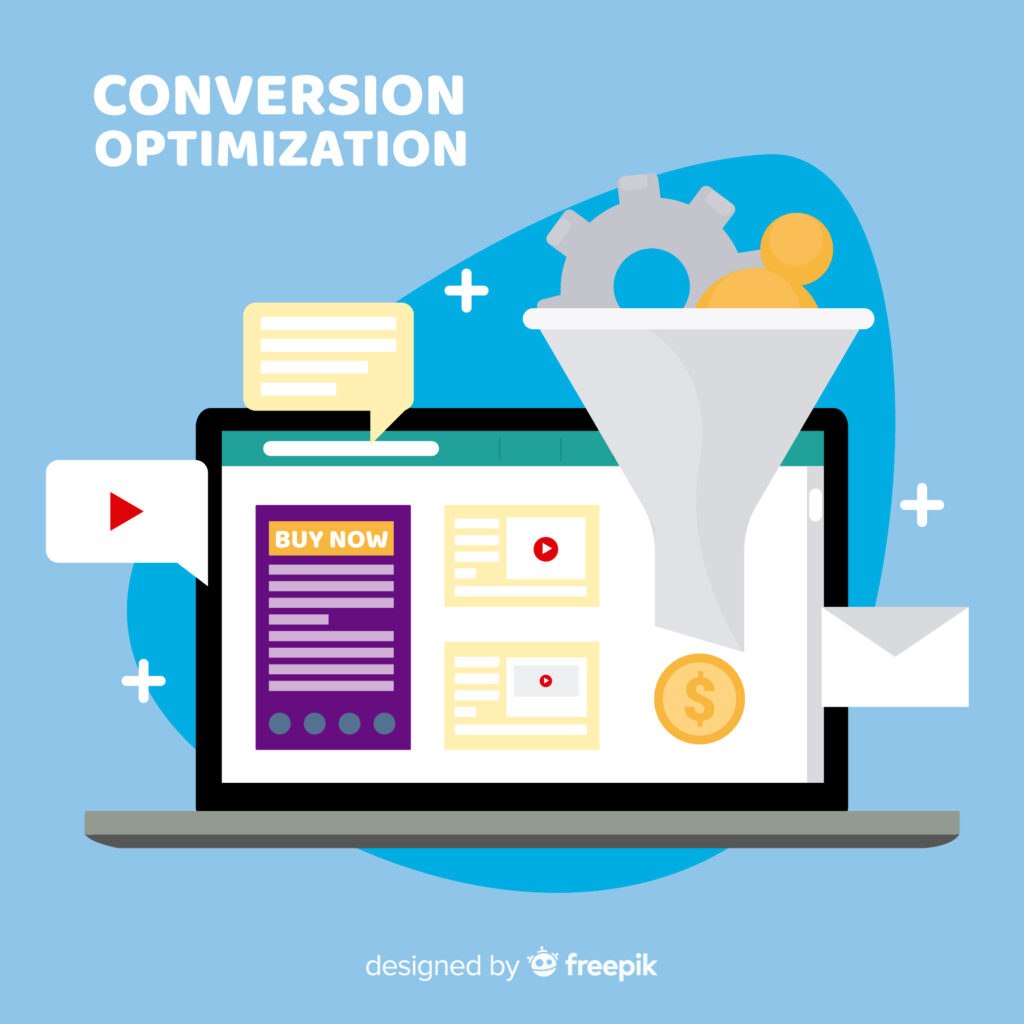
Reading the Data: What Your Analytics Are Actually Telling You
Most businesses install Google Analytics 4, look at the traffic graph, and feel reassured that numbers are going up. But the real insights live deeper — in behaviour flows, funnel drop-off reports, and audience segments.
Here are the specific metrics worth reviewing weekly:
| Metric | What To Look For | What It Tells You |
| Exit rate per page | Pages with >70% exit rate | Where your funnel is leaking |
| Conversion rate by traffic source | Which channel converts best | Where to scale your budget |
| Average session duration | Drops after content updates | Whether new content is engaging |
| Goal completions by device | Mobile vs desktop conversion gap | Where mobile UX is failing |
| New vs returning visitor conversion | Returning visitors converting more | Trust and retargeting are working |
| Funnel visualisation | Step where most users drop off | The single page that needs most attention |
The pattern you’re looking for is the gap between traffic and intent. High-traffic pages with low conversions are your biggest opportunities — not because they’re failures, but because they have an audience that just needs a better reason to act.
The Retargeting Safety Net You’re Probably Not Using
Think about this: someone finds your website through a paid campaign. They spend two minutes reading your services page. They get a phone call. They close the tab. They’re gone.
Or are they?
With retargeting (also called remarketing), you can show that same person a follow-up ad as they browse other websites, scroll through Instagram, or watch YouTube. You’re not starting from zero — you’re continuing a conversation with someone who already showed interest.
Retargeting is one of the highest-ROI channels available to businesses today because the audience is pre-qualified. They already know you exist. The best digital marketing agency in Malaysia will typically run retargeting as a standard component of any paid strategy — and the numbers support it. Retargeted ads have a click-through rate 10 times higher than standard display ads, according to Criteo’s industry data.
The most effective retargeting sequences follow a simple logic:
- Awareness retargeting — Show brand-building content to people who visited but didn’t engage deeply
- Consideration retargeting — Show testimonials and case studies to people who spent significant time on your site
- Decision retargeting — Show a direct offer or limited-time incentive to people who visited your pricing or contact page
Conversion Optimisation for Service Businesses in Malaysia
Most CRO guides are written with e-commerce in mind — conversion = purchase. But what about service businesses? Consultants, agencies, clinics, property developers, B2B companies?
For service-based businesses, the conversion event is usually an enquiry — a form submission, a WhatsApp message, a phone call. And the path to that enquiry is longer and more trust-dependent than a product purchase.
Here’s what works specifically for service businesses in the Malaysian market:
Lead magnets — Offer something genuinely useful in exchange for contact details. A free website audit, a downloadable pricing guide, a 15-minute free consultation. The best digital marketing services agency will always have a lead magnet that serves as the first step in a longer relationship.
Video proof — A 90-second video of a real client explaining how your service changed their business outperforms any written testimonial. Video is harder to fake. Audiences know this instinctively.
WhatsApp as a conversion tool — In Malaysia, WhatsApp is the most trusted communication channel bar none. Adding a WhatsApp CTA (with a pre-filled greeting) to key pages regularly boosts enquiry rates significantly. It reduces friction and meets users where they already are.
Clear pricing signals — You don’t have to publish exact prices, but giving a “Starting from RM X” figure dramatically reduces time-wasted enquiries and increases the quality of leads who do reach out.
If you’re a business in Penang looking for a digital marketing partner who treats your growth like their own, Zumax Digital is worth a serious look. Their team combines technical expertise with a genuine understanding of what drives conversions in the Malaysian market. From website strategy to paid campaigns to full-funnel performance optimisation, Zumax Digital brings the kind of joined-up thinking that siloed agencies rarely deliver. Visit Zumax Digital to see their work and approach.
The Long Game: Building a Conversion Ecosystem, Not Just a Page
One of the most common mistakes businesses make is treating conversion optimisation as a one-time project. Fix the landing page, boost the CTA, call it done. Then they’re surprised when results plateau six months later.

The businesses with the best long-term conversion rates think of their entire digital presence as an ecosystem — every touchpoint working together to move someone from stranger to buyer to repeat customer.
This means:
- Content that attracts — Blog posts, videos, and social content that bring in high-intent visitors
- Landing pages that convert — Focused, fast, and friction-free
- Email sequences that nurture — Automated follow-ups that keep warm leads engaged
- Retargeting that recaptures — Bringing back those who left too soon
- Reviews and referrals that compound — Happy customers becoming your most credible marketing channel
Building this ecosystem takes time. But once it’s running, it becomes the kind of asset that generates leads and revenue while you sleep — which is, ultimately, what every good digital strategy is working toward.
Putting the Numbers to Work: A Realistic Conversion Improvement Scenario
Let’s make this concrete. Imagine a Malaysian professional services firm with the following baseline:
| Metric | Current State |
| Monthly website visitors | 3,000 |
| Current conversion rate | 1.5% |
| Monthly enquiries | 45 |
| Average client value | RM 8,000 |
| Monthly revenue from web | RM 360,000 (assuming 15% close rate) |
Now imagine a focused three-month CRO effort improves conversion rate to just 3% — which is absolutely achievable with the strategies in this article:
| Metric | After Optimisation |
| Monthly website visitors | 3,000 (same) |
| New conversion rate | 3% |
| Monthly enquiries | 90 |
| Average client value | RM 8,000 |
| Monthly revenue from web | RM 720,000 (estimated) |
Double the revenue. Same traffic. No increase in ad spend.
That’s the compounding power of conversion rate optimisation. And it’s why the best digital marketing services agencies in Malaysia prioritise it as a core service, not an afterthought.
Why This Matters More Than Ever in 2025–2026
The digital advertising landscape is getting more competitive and more expensive. Cost-per-click on Google Ads across most Malaysian industries has been rising steadily year-over-year, as more businesses compete for the same search real estate.
In that environment, businesses that are inefficient with their conversions will simply get priced out. They’ll spend more and more just to maintain the same lead volume, while competitors who’ve invested in CRO extract more value from every ringgit they spend.
This is not a future problem. It’s a now problem — and the window for a competitive advantage through conversion optimisation is still open, but it won’t be forever.
Frequently Asked Questions
- What is a good website conversion rate for a Malaysian business?
Industry averages sit between 2–4% across most sectors. Top performers in competitive verticals often achieve 5–8%. For B2B service businesses, even 3% with high-value leads can produce exceptional returns.
- How long does conversion rate optimisation take to show results?
Expect meaningful data within 30–60 days if you have sufficient traffic (at least 1,000 monthly visitors). Statistically significant A/B test results typically require 2–4 weeks, depending on volume. Systematic improvements compound over 3–6 months.
- Do I need to redesign my entire website to improve conversions?
Rarely. Most conversion gains come from targeted changes — a better headline, a repositioned CTA, a faster page load, a shorter form. Full redesigns carry risk and cost. Start with high-impact, low-effort changes first.
- Can social media help with conversions?
Social media builds awareness and trust, which indirectly supports conversion. But direct conversion from social tends to be lower than from search or email. The most effective approach uses social to drive traffic, then optimises the landing experience for conversion.
- What’s the single biggest conversion killer most businesses overlook?
Page load speed on mobile. Businesses spend heavily on design and copy, then lose half their visitors before those elements even load. It’s the first thing to fix.
Your Next Step Starts Here
Every business website has untapped revenue sitting inside it — visitors who showed up with real intent but left because something wasn’t quite right. Speed. Trust. Clarity. The path forward.
The good news is that none of this is guesswork anymore. The strategies, tools, and data exist to diagnose exactly what’s holding your conversions back and fix it methodically.
But strategy without execution is just theory. If you’re ready to stop watching potential clients disappear and start turning your website into a genuine growth engine, the team at Zumax Digital is exactly who you need in your corner.
Zumax Digital is one of Malaysia’s most capable full-service digital marketing agencies — bringing together conversion strategy, paid media, content, and technical execution under one roof with the kind of accountability that actually moves the needle. Whether you’re based in Penang, Kuala Lumpur, or anywhere else in Malaysia, our team works as a true partner in your growth — not just another vendor sending you monthly reports nobody reads.
Ready to find out exactly why your website isn’t converting — and what to do about it? Book a free strategy conversation with the Zumax Digital team today and walk away with clarity, direction, and a roadmap that’s built for your business, not a generic template. Your competitors aren’t waiting — and neither should you!