




Landing Page or Website: Which One Do You Actually Need?

Last Updated on February 24, 2026
In today’s digital landscape, businesses have more options than ever to establish an online presence. But one common question keeps popping up: should you invest in a full corporate website or focus on a landing page? The answer isn’t one-size-fits-all—it depends on your business goals, marketing strategies, and how you want to engage your audience. In this article, we’ll break down the differences, advantages, and scenarios where each option makes sense.
What is a Corporate Website?
A corporate website is the central hub for your business online. It’s typically multi-page and contains detailed information about your company, products or services, team, and contact information. Beyond just providing information, a well-designed website acts as a reflection of your brand identity. It helps establish credibility, builds trust, and serves as a resource for visitors at any stage of the customer journey.
Corporate websites often include sections like About Us, Services, Blog, Testimonials, and Contact. They’re built for long-term growth, allowing businesses to continuously add content, showcase achievements, and provide a comprehensive experience for visitors.
What is a Landing Page?
A landing page is a single web page with a specific goal, usually created to support a marketing campaign or drive a particular action. Unlike corporate websites, landing pages are focused and concise, often designed to convert visitors into leads or customers.
The goal of a landing page is simple and clear: it could be collecting email addresses, promoting a new product, or encouraging a purchase. Every element on the page—from the headline to the call-to-action button—is crafted to minimize distractions and guide the visitor toward completing that action.
Key Differences That Matter to Your Business
While both websites and landing pages exist online, they serve very different purposes:
| Aspect | Website | Landing Page |
| Scope | Provides a broad overview of your business | Focuses on one specific goal |
| Content | Multiple pages with detailed information | One page with goal-oriented content |
| Design Approach | Emphasizes brand storytelling and user experience | Optimized for conversions |
| Longevity | Long-term asset, updated regularly | Often temporary and campaign-based |
When You Actually Need a Website
While landing pages are great for specific campaigns, there are clear reasons why a full corporate website is essential for many businesses.
- To Build Brand Presence and Credibility
A professional website instantly signals that your business is legitimate and trustworthy. It’s your online headquarters where potential clients can learn about your values, expertise, and history. Without a website, many customers might hesitate to engage, especially in industries where credibility is critical.
- To Promote Multiple Services or Products
If your business offers a variety of services or products, a website is ideal for organizing that information. Visitors can explore your offerings at their own pace, compare options, and make informed decisions—all from a single destination.
- To Provide Detailed Information for Customer Consideration
Some purchases or partnerships require deeper research before a decision is made. A website allows you to provide case studies, testimonials, product specifications, and blog content that help educate and persuade visitors over time.
When a Landing Page Is the Better Choice
Landing pages shine when your goal is to drive a specific action in a short timeframe. Here are common scenarios:
- For Running Ads, Promotions, or Limited-Time Campaigns
If you’re running paid ads or promoting a seasonal offer, a landing page gives you a targeted destination designed to convert. Instead of sending visitors to your general website, the landing page focuses on one message and one action, increasing the likelihood of success.
- For Launching a New Product or Service
When introducing something new, a landing page helps generate buzz and collect interest. It allows you to highlight benefits, share early testimonials, and even gather pre-orders without the distraction of your full website content.
- For Collecting Leads Quickly with a Clear Objective
Need to build an email list, sign people up for a webinar, or register attendees for an event? Landing pages simplify the process by eliminating unnecessary links or options, giving your visitors a clear path to follow.
Why Do Some Businesses Use Both?
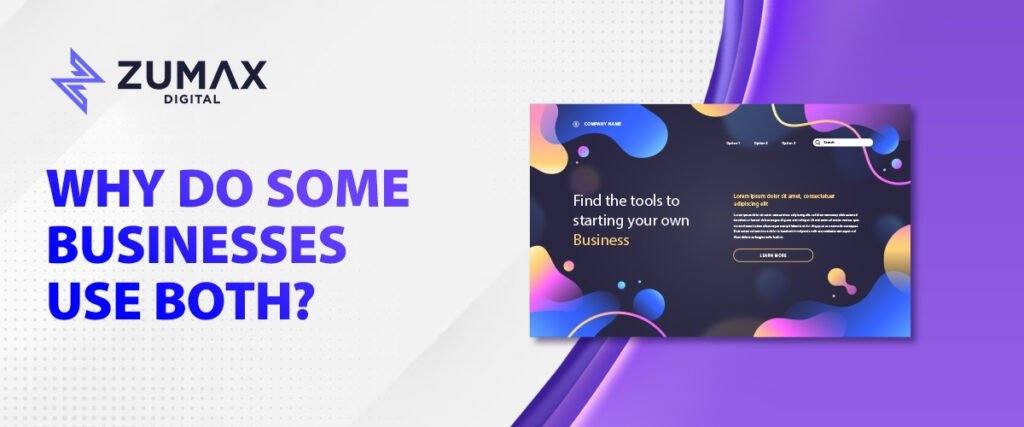
Many businesses achieve the best results by combining both strategies. Even with a full website in place, they often create landing pages to drive specific actions. For example, a tech company may use its website to provide detailed information about all its services and solutions. At the same time, it can design a landing page that focuses on a particular service or solution, highlights a customer pain point, and uses targeted messaging to prompt immediate action, such as signing up for a demo or requesting a quote. This approach allows businesses to build credibility through their website while converting high-intent visitors through focused, results-driven landing pages.
Conclusion
Choosing between a landing page and a corporate website isn’t about which is better overall—it’s about which is better for your current goals. Websites provide credibility, depth, and a long-term online presence. Landing pages provide focus, speed, and high conversion potential for specific campaigns. Understanding your objectives, resources, and audience needs will help you make the right decision.
Take Action Now
Not sure where to start? Share your business goal with us, and our digital marketing specialists will analyze your needs and recommend the web design services that’s best for you.