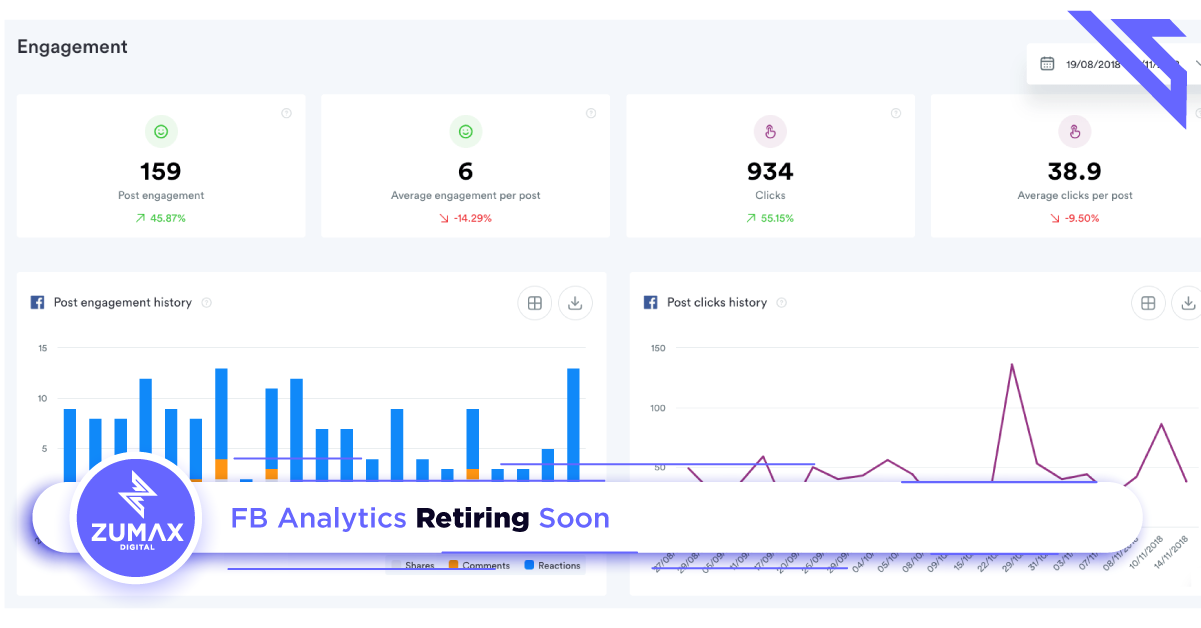
Facebook Analytics is Gone: The Transition Guide (2026 Update)

If you’ve noticed that your old bookmarks for Facebook Analytics are redirecting, you’re not alone. Facebook officially retired its standalone Analytics tool to streamline its ecosystem. For businesses in 2026, the challenge isn’t just about finding where the data went—it’s about understanding the new measurement framework Meta has introduced.
The New Measurement Framework: 2025-2026 Metrics
Meta has recently standardised its reporting across Facebook and Instagram to be more consistent. If you are seeing different terms in your dashboard, here is what they mean:
- Viewers (Replaced Reach): Measures unique individuals who actually saw your content. It is more accurate than the old “Reach” metric, which often over-counted passive feed rendering.
- Views (Replaced Impressions): Counts every time your content appears on a screen. Note: You may see a slight “inflation” here compared to legacy data because it now captures repeat views more effectively.
- Interactions (Replaced Engagement): A stricter metric focusing on “quality” actions—likes, comments, shares, and saves. Passive behaviours like “three-second video views” no longer count toward this total.
Where to Find Your Data Today
To get the insights you need, you must now use a combination of three primary tools:
- Meta Business Suite (The Hub)
- Your go-to for organic performance. Use the “Insights” tab to see cross-platform trends for both Facebook and Instagram.
- Ads Manager (The Engine)
- For paid performance. This still uses legacy metrics (Reach/Impressions) for now, which can make comparing paid vs. organic data tricky.
- Events Manager (The Bridge)
- Vital for website tracking. With privacy changes like iOS 14.5 and the shift to a cookieless future, the Conversion API (CAPI) is now the industry standard for tracking conversions.
Comparison: Facebook Analytics vs. Meta Business Suite
| Feature | Old Facebook Analytics | 2026 Meta Business Suite |
| Omni-channel View | Limited to FB Properties | Full FB, IG, and WhatsApp integration |
| Reporting | Complex Funnels/Cohorts | Simplified “Weekly Plans” & AI Insights |
| Mobile Access | Separate App (Now defunct) | Integrated Meta Business Suite App |
| Prediction | Manual Analysis | AI-driven “Potential Audience” forecasting |
3 Steps to Protect Your Data in 2026
- Implement Meta CAPI: Don’t rely solely on the Pixel. Server-side tracking via the Conversion API is essential for accurate attribution.
- Set Up GA4 Cross-Tracking: Use UTM parameters on all Facebook posts to see the full “off-Facebook” journey in Google Analytics 4.
- Audit Your Metrics: Update your internal KPIs to reflect Interactions and Viewers so your year-over-year reporting remains accurate.
Concluding Paragraph
Master the New Era of Meta Data. The retirement of Facebook Analytics wasn’t an end, but an evolution toward a more unified, AI-driven reporting system. Navigating these constant metric shifts—from “Reach” to “Viewers” and “Engagement” to “Interactions”—can be overwhelming for any business owner.
At Zumax Digital, we help you cut through the noise by setting up advanced tracking solutions like the Meta Conversion API and custom GA4 dashboards. Don’t let a change in tools lead to a gap in your growth. Contact us today to ensure your digital strategy is backed by accurate, actionable data that drives real ROI!